
★★★★★
206 five-star Google reviews
300+
Families helped
7 days
Fastest closing
A+
BBB rating

What to Do in the First Days After a House Fire in Massachusetts
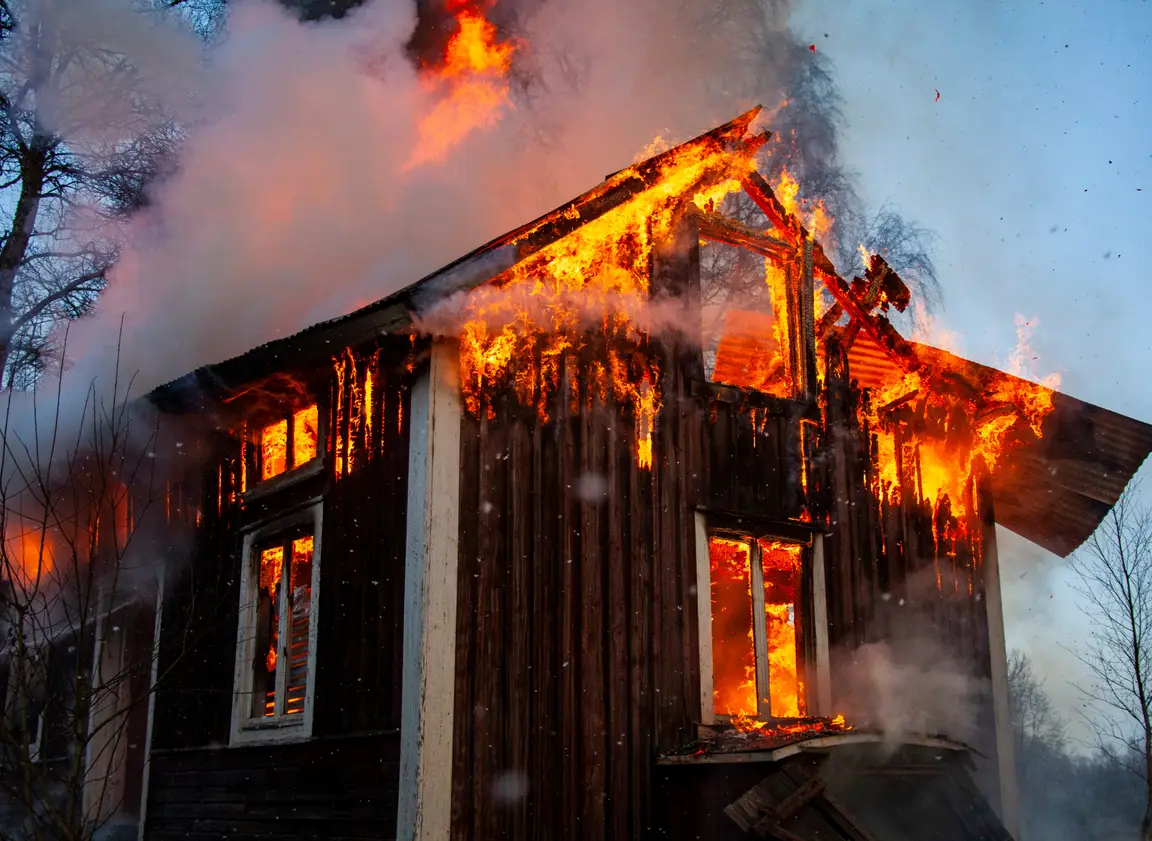
The smoke smell is still in your clothes, and everyone wants a decision from you. Slow down for a day or two. What happens in the first week protects your claim, your safety and whatever price you get later.
Before anyone goes back inside, ask the fire department whether the structure is safe to enter. Find out, too, whether the building department has posted it. Once a house is posted, the town will want a say in what happens next, and you’ll want that in writing for the file.
First, get the fire department’s incident report. Your insurer will ask for it, and so will any buyer who wants to understand the fire damage. Call your insurance company the same day, even if you aren’t sure the loss is covered, and write down the claim number.
Secure the house before anything else goes wrong. Board up broken windows, tarp an open roof and shut off any utilities the fire department hasn’t already cut. Massachusetts insurers may reimburse those costs, depending on your policy, so keep every receipt.
Then walk the house with your phone and record everything. Film each room, the ceilings, the basement and anything water from the hoses reached. Photos taken before cleanup are the best proof you’ll ever have of the fire damage and what it cost.
Neighbors and investors may start calling within days, sometimes before the smoke clears. You don’t owe anyone an answer that week.
Don’t throw out damaged belongings until the adjuster has seen them. That one mistake shrinks more claims than anything else I’ve watched families make.
How Fire Damage Changes What a House Is Worth
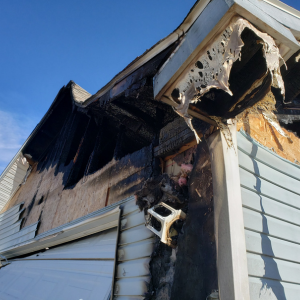
A small stovetop fire that scorched cabinets leaves a very different house from one where the roof framing burned through. Both count as fire damage, yet they share almost nothing else. Buyers price the worst of what they can see, plus a cushion for what they can’t.
Structural damage drives value down the hardest. Charred joists, rafters and wall studs have to be inspected and in many cases replaced, and that work triggers permits and code upgrades. Wiring near the fire usually comes out too, because heat can damage insulation well beyond the scorch marks.
Older Massachusetts homes add another layer, since plaster walls, old wiring and balloon framing let smoke and heat travel between floors in ways newer houses don’t. Once a contractor opens those walls, the town will expect today’s code, and that upgrade work can cost more than the fire damage itself.
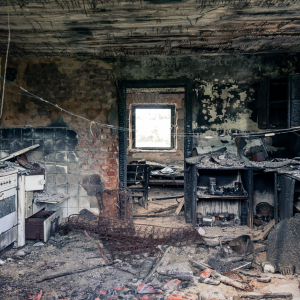
Smoke and soot travel farther than flames, settling into ductwork, insulation and drywall in rooms the fire never touched, and the smell comes back on humid days if cleaning was rushed. Water from firefighting adds its own problem, since soaked floors and walls can grow mold within days.
I bought a cape in Chicopee where the fire stayed in the kitchen, yet smoke had reached every closet upstairs. The owners had already paid for two rounds of cleaning, and the bedrooms still smelled like a campfire every August. We bought it as it stood, and they stopped paying to fix a house they’d already decided to leave.
Location still matters after a fire. A burned house on a good street in a strong Massachusetts market keeps much of its land value, and buyers know it.
Your Homeowners Insurance Claim on a Massachusetts Fire
Most standard policies cover fire damage regardless of cause, apart from an intentional loss like arson. That’s the baseline the state’s consumer affairs office describes, and it holds for cooking fires, lightning and wildfires alike. Your own policy language decides the details.
Read the declarations page for two things. One is whether your dwelling coverage pays replacement cost or actual cash value, which subtracts depreciation. Another is your limit for additional living expenses, the coverage that pays for a hotel, meals and other extra costs during the time you can’t live at home.
Expect the money in stages. According to the Massachusetts Division of Insurance, the first payment is often an emergency advance, and a large fire claim can take several weeks to several months to settle in full. The deductible applies even when the fire wasn’t your fault.
Contents are a separate part of the claim. Make a room-by-room list of what you lost, with rough ages and prices, before the details fade. Old photos, receipts and online order histories help fill the gaps.
Get your own repair estimates. The adjuster’s number is a starting point. A contractor’s written bid gives you something to compare against, and that same bid helps later if you sell instead of rebuilding.
If you still have a mortgage, the lender’s name will likely appear on the claim check. Call the servicer early and ask how they release funds on a house with fire damage.
Why the Town Gets Notice Before Your Fire Insurance Pays
Most homeowners never hear about this Massachusetts rule until it slows a check down. Under Chapter 139, Section 3B, an insurer paying a claim of $1,000 or more on a damaged building has to give written notice first. That notice goes out at least ten days before payment.
Three local offices receive it: the building commissioner or inspector, the fire department or arson squad, and the board of health or select board. The point is to give the city or town a chance to act if the burned building is unsafe and may need securing or demolition.
If the town notifies the insurer by certified mail that it plans to pursue a lien, the insurer holds payment until those proceedings are resolved. The town has to start them within thirty days for the hold to apply. Once perfected, that lien can reach the insurance proceeds.
Most fire claims pass through this step without a problem. Still, it explains why a check can arrive later than an adjuster first suggested. If the town flags your house, ask the building department what it needs to see, because a boarded, secured house rarely ends up in that position.
Ask your adjuster whether the notice has gone out and to which offices. Then call the building department yourself and ask whether anyone plans to inspect the fire damage. One quick call often answers the question before it turns into a delay.
Keep copies of any letters from the town with your claim file. Any buyer will want to know whether an order or lien is attached to the property.
Can You Sell a Fire-Damaged House Before the Claim Settles?

Yes, though the claim and the sale have to be planned together. Who keeps the insurance money depends on your policy, your mortgage and what the sale contract says. Selling doesn’t automatically end your claim, and it doesn’t hand it to the buyer either.
Many sellers finish the claim first, then sell the house as it stands and keep the settlement. Others sell quickly because the carrying costs are crushing them, and they keep working the claim after closing. Some buyers will ask to take over the claim as part of the price. Have a Massachusetts real estate attorney review any contract language about insurance before you sign.
Spell out the insurance terms in the sales contract itself. Who keeps the dwelling payment, who keeps the contents payment and who handles any final inspection by the adjuster should all be in writing. Vague promises about a claim on a house with fire damage are where disputes start.
Your mortgage lender sits in the middle of all this. Proceeds often go to pay down or pay off the loan, especially when the house won’t be rebuilt. Ask the servicer, in writing, how they’ll handle the check if you sell.
Keep paying the mortgage as you decide. Missed payments on a house with fire damage can spiral into late fees and foreclosure notices before the adjuster has even finished.
Repair or Sell a House With Fire Damage in Massachusetts
Rebuilding makes sense when three things line up. The insurance money covers most of the work, you have somewhere to live in the meantime, and you plan to stay in the house afterward. Without all three, repairs can turn into a second job you didn’t ask for.
Massachusetts doesn’t require you to repair fire damage before you sell. You can list after repairs, sell partly repaired or sell exactly as the fire left it. Each path trades time and money for price.
Rebuilding usually runs long. Permits, engineering on burned framing and contractor schedules can stretch the repair of serious fire damage well past a year, and additional living expense coverage has limits.
Ask each contractor whether the bid includes permits, debris removal and smoke sealing. Bids that skip those items look cheaper than they are.
Be careful with the middle path. Paying for demolition and partial cleanup, then running out of money, leaves you with a house that’s harder to sell than either a finished one or an untouched one.
I’d lean toward selling when the repair bids exceed what the insurance will pay, when the house was already headed for a sale, or when the stress has taken over your life. Those are good reasons, and choosing a simpler road isn’t giving up.
Want a number to compare against your repair bids? A local buyer can make a cash offer as the house stands. Naples Home Buyers buys houses with fire damage across Massachusetts, and an offer costs nothing to hear.
What Massachusetts Law Says About Disclosing Fire Damage
Massachusetts follows buyer beware, so there’s no standard seller disclosure form. That doesn’t make silence safe. You can’t lie about the fire or hide it, and a direct question from a buyer gets a truthful answer.
Real estate agents carry a heavier duty under state consumer protection rules, which require a licensee to disclose known material facts that could change a buyer’s mind, whether or not the buyer asks. Fire damage is about as material as a defect gets.
A few documents are required on every sale. Homes built before 1978 need the lead paint notification, and a house on septic needs a Title 5 inspection. The local fire department also has to inspect the smoke and carbon monoxide alarms and issue a certificate. A house with fire damage may not pass until those alarms are replaced, so call the fire department early and ask how they handle it.
Older fires count too. If a fire happened years ago and was fully repaired, you still can’t deny it when a buyer asks. Permits from that repair become your best evidence that the fire damage was handled properly.
Disclose in writing and keep a copy. List the date of the fire, what burned, what was repaired and by whom, and what wasn’t, because clear paperwork protects you long after closing.
Who Buys a House With Fire Damage in Massachusetts
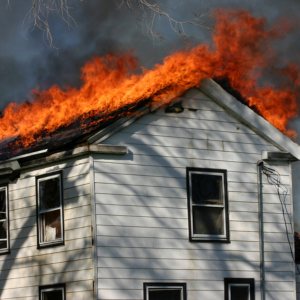
Your buyer pool shrinks the moment a house isn’t livable. Many lenders won’t make a standard mortgage on a home without working systems, a sound roof or a safe kitchen. That takes most first-time buyers out of the picture.
Three kinds of buyers stay. Renovation-loan buyers can finance the house and the repairs together, though their loans come with inspections, contractor approvals and long timelines. Contractors and rehabbers buy to fix and resell, and they’ll price the work carefully.
Cash buyers make up the third group, and because they skip the lender, the condition of the house doesn’t stop the sale. Expect a cash offer to reflect the repairs, and compare it against what you’d net after paying for them yourself.
Ask any buyer how they’ll handle the debris, the smell and the town’s paperwork. We buy across the Pioneer Valley as cash home buyers in Chicopee and house buyers in Holyoke, among other towns. A buyer who has closed on fire damage before won’t flinch at those questions.
Some callers are wholesalers who sign a contract and then try to resell it to someone else. Ask directly whether the person you’re talking to is the one who’ll close.
Get more than one opinion. Two or three offers on a house with fire damage will show you a realistic range fast.
How to Price a House With Fire Damage
Start with what the house would be worth fully repaired. Recent sales of similar Massachusetts homes nearby give you that figure. For context, the statewide median single-family price was $665,000 in May 2026. Hampden County’s median sale price sat near $356,000 in July 2026. Your street matters more than either number.
Next, subtract the real cost of repairs, using written contractor bids rather than guesses. Add room for surprises, because opened walls on a burned house almost always reveal more. Then subtract the buyer’s holding costs and a reasonable margin for their risk and time.
What’s left is a fair as-is range. A cash offer inside that range is a fair offer, even if it stings next to what the house was worth before the fire.
Pricing off the insurance estimate alone is a mistake. Adjusters estimate repair costs for the claim, not what a buyer will pay for the house.
Listing agents sometimes suggest pricing high and waiting. With fire damage, a stale listing tends to sell for less in the end, because every week on the market tells buyers something is wrong. Realistic pricing on day one usually nets more.
Paperwork to Gather Before You Sell a Fire-Damaged House
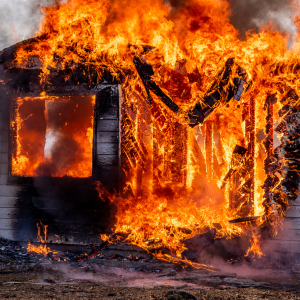
Buyers move faster and argue less when everything sits in one place. Put these in one folder before you list or call a buyer:
- The fire department’s incident report
- Your claim number, the adjuster’s estimates and any payment letters
- Written contractor bids and invoices for work already done
- Any building permits, inspection results or orders from the town
- Your mortgage payoff statement
- Photos and video from right after the fire
If your insurer asked for a sworn proof of loss, keep a signed copy with the rest. Your closing attorney will also order a municipal lien certificate from the town collector. It shows unpaid taxes and utility charges on the property. Even after a fire, the bills keep coming, so keep them current.
Fire damage is common statewide: Massachusetts fire departments reported 25,217 fires in 2025, with $284.1 million in property damage, according to the state’s 2025 fire fact sheet. Buyers who work in this space have seen plenty of fire damage, and a full folder tells them you have nothing to hide.
How Long a Fire-Damaged House Sale Takes in Massachusetts
A listed sale with a financed buyer can take months, especially if repairs have to happen first. Renovation loans add appraisals, contractor approvals and inspections at each stage. Any town order on the property adds its own wait.
Cash sales move on your timeline. Once the title is clear and the payoff letter is in hand, closing can happen in a few weeks, sometimes sooner.
The insurance claim keeps its own clock. Some sellers close first and finish the claim afterward. Others wait for the final payment before they sign. Either order can work for a house with fire damage, as long as the contract says which one you’ve chosen.
I once bought a Holyoke two-family after a basement fire that started near an old oil burner. The upstairs tenants had moved out, the owner lived in Westfield and couldn’t face another winter of repairs, and the insurance claim was nearly done. We closed while she finished the claim, and she never had to walk into that basement again.
Winter adds pressure in Massachusetts, since a burned house with no heat can freeze. Burst pipes then add water damage on top of the fire damage, so tell your insurer and any buyer if the heat is off.
Start the conversation before the claim closes. Knowing your options early helps you decide whether to rebuild, repair part of the fire damage or sell the house as it stands.
Fire Damage Questions Massachusetts Homeowners Ask
Do You Have to Fix Fire Damage Before Selling?
No. You can sell a house in any condition, as long as you’re honest about what happened. Many sellers choose to sell as-is and let the buyer handle the repairs.
Who Gets the Insurance Check if You Still Have a Mortgage?
Your lender is usually named on the check along with you. The servicer decides how funds are released, and the money often goes toward the loan if you won’t rebuild. Ask for their process in writing before you sign a sale contract.
Can You Sell a House That Isn’t Livable After a Fire?
Yes, though it narrows the buyers who can close. Financed buyers struggle to get a standard loan on an unlivable house. Cash buyers and renovation-loan buyers are the usual fit.
Can You Sell a House the Town Ordered Secured or Torn Down?
You can, though the order stays with the property and the buyer has to take it on. Get a copy of the order and any deadlines from the building department before you talk price. Buyers who handle fire damage regularly know how to work with those orders.
Does Smoke Damage Show Up in a Home Inspection?
Usually, yes, because inspectors look for soot in the ductwork, stained ceilings, odor and replaced drywall. Disclosing smoke damage up front keeps the inspection from becoming a surprise that sinks the sale.
Every fire leaves a different house behind. If you’d like to talk through your options, contact Naples Home Buyers or call (413) 331-6060. We’ll give you a straight answer and a fair cash offer, with no pressure and no obligation.